Farming and Nature Regeneration: Learning from Romania

Farming and Nature Regeneration: Learning from Romania

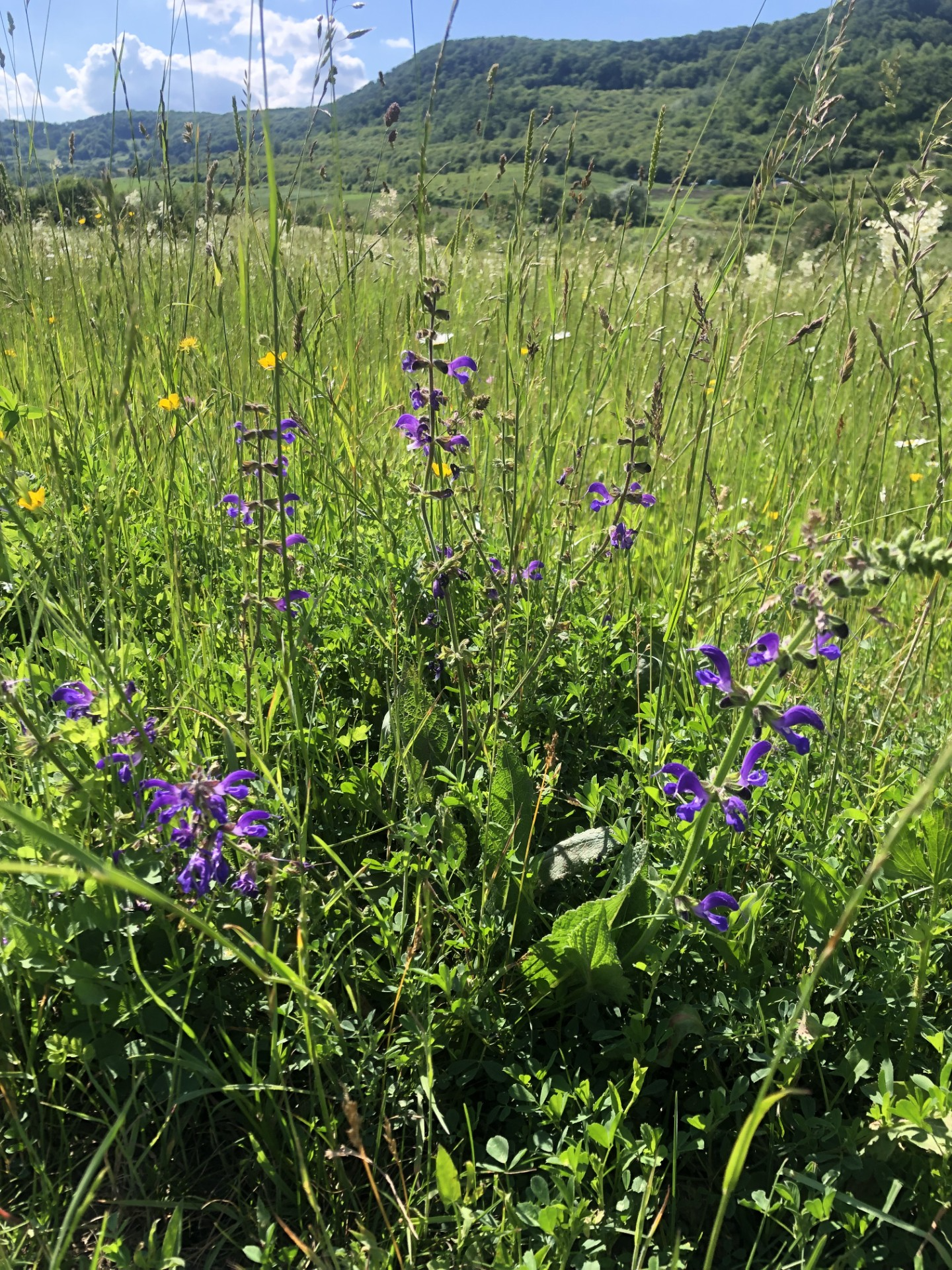
The Transylvanian landscape typically uses very few fences or walls. Rachael Antwis.

Director of Nature Recovery, Dr Rachael Antwis, recently returned from a study tour of Romania looking at how grazing animals can support rural economies, regenerate landscapes, and enrich food systems. Here are some of her key takeaways.

I recently attended a study tour of Romania jointly organised by Pasture for Life and The Wildlife Trusts. Pasture for Life is a membership organisation that aims to demonstrate how grazing animals can support rural economies, regenerate landscapes, and enrich food systems. There were eight Pasture for Life members and eight Wildlife Trust members including myself, Northumberland, Lincolnshire, Dorset and The Wildlife Trusts. 

We were hosted by various organisations including the ADEPT Foundation - an NGO set up 20 years ago to preserve the nature-rich, farmed landscapes of Transylvania along with other aspects of Transylvanian life (such as pottery production).  

We saw a vast array of different hay meadows and associated grazing systems and spoke to so many different people about how they manage to combine nature recovery and productive farming systems. I think the answer is somewhat similar to the UK – it’s incredibly difficult. If you want truly biodiverse ecosystems, you need a mixture of different herbivores at low intensity (ideally in a pastoral system), and the apex predators required to keep the numbers in check – although we did talk extensively about the problems that farmers and communities faced with bears.

Other key takeaways were around baselines, boundaries, and resilience. Baselines in terms of how massively far away we are in the UK from what a biodiverse ecosystem looks like at scale. The Romanian hay meadows were filled with grasses, legumes and flowers, and as you walked through the invertebrates scattered everywhere – the sound of the crickets and birds was genuinely difficult to talk over. And I also learnt that a quick and easy indicator of a healthy meadow is if you can see five colours and three heights. 

But we also talked a lot about baselines in terms of shifting baselines and how over time we have come to accept these degraded and fragmented landscapes in the UK – and in many cases think they are normal and correct, all in the name of ‘cultural heritage.’ Our farming landscapes in particular have only really existed since the end of the Second World War – so two or three generations at most – and yet the idea of a bright green landscape littered with sheep and lots of fences and stone walls is considered a natural ‘British’ landscape.  

This brings me to my next key takeaway – boundaries. What was fascinating about the Transylvanian landscapes is the almost complete absence of boundaries in terms of fences and walls. People still know what land belongs to who and what grazing rights are in place in the commons, but by and large, there were no physical delineations. 

An image of the Transylvanian landscape which typically uses very few fences or walls.

The Transylvanian landscape typically uses very few fences or walls. Rachael Antwis.

In the places we visited there was also a notable lack of arable and horticulture. However, this is on the rise in Romania, meaning more land is being lost to crop monocultures. However, because there is just so much land, biodiversity across the landscape isn’t being decimated as a result.  

Which brings me to my third point around resilience; because the UK is so nature-depleted, we don’t have that type of resilience baked into our landscapes, and any further loss of land to farming or development can have huge implications for the small margins we are working with. This isn’t to say that we shouldn’t have farming or development in our landscapes – we just need to do it in a nature-friendly way. But we also need to restore those landscape scale oases for nature; our Landscape Recovery Schemes in Wigan and the West Pennine Moors, our work to create nature corridors and link up our nature reserves, and work of this kind across the UK, are vital examples of this. 

Blacksmiths from the local Gypsy community hard at work in Romania.

The blacksmiths from the local Gypsy community in Romania. Rachael Antwis.

My time in Romania has left me with so much to think about. It has also left me with a huge appreciation of, and gratitude to, the amazing Romanian people who helped us get a very up-close and personal experience of different farming systems and other nature recovery approaches and challenges in their incredible landscape. Many of our hosts, in line with the strong Romanian culture of hospitality, also wanted to introduce us to their families and friends and showcase Romanian culture. 

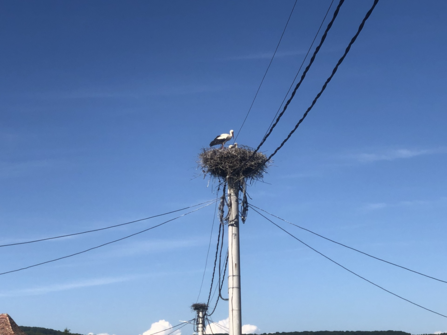
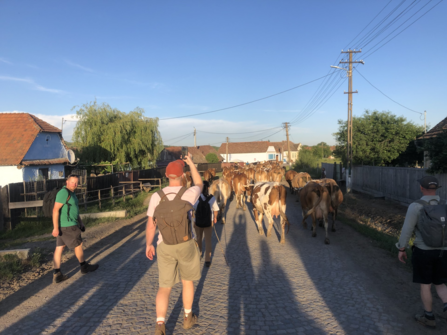
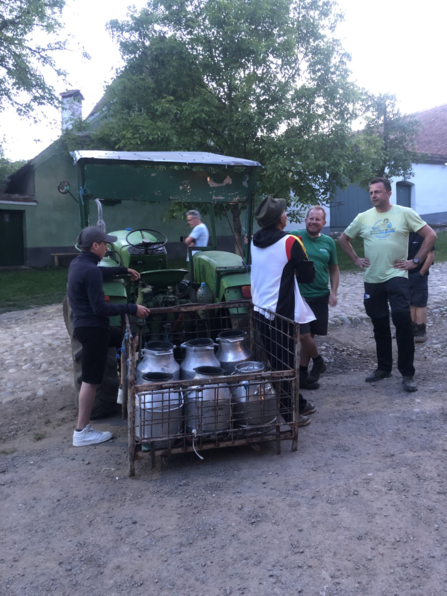
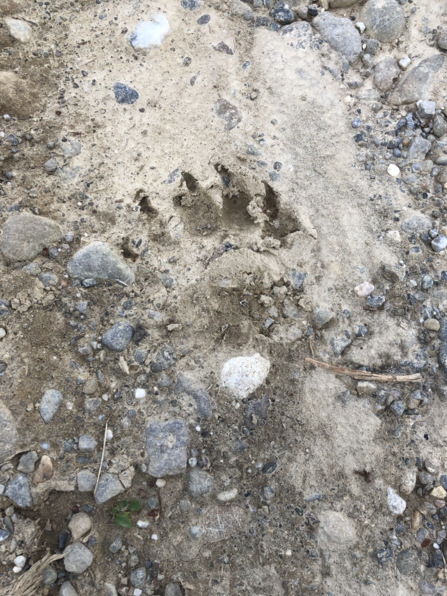
Our trip also included visits to meet the local Gypsy community to meet the blacksmiths, walking the cattle home to the village from the fields (who all know exactly which house they lived in!), and then seeing the milk from those same cows being delivered to the communal village dairy for wholesale. Not to mention the stork nesting on telegraph poles and some seriously huge bear footprints.