Species spotlight: Ivy-leaved toadflax, a thriving urban wildflower

Species spotlight: Ivy-leaved toadflax, a thriving urban wildflower

©Katrina Martin/2020VISION

In this guest blog, Horticulturist Kevin Line teaches us about ivy-leaved toadflax (Cymbalaria muralis), a wildflower originally introduced to the UK in the 1600s which has since become naturalised and found a way to thrive in unexpected places.

I've loved this little wildflower, ivy-leaved toadflax (Cymbalaria muralis), for many years. I feel like it's following me around. This enchanting trailing wildflower was first introduced into UK gardens in the 17th century, and along its journey it has colonised not only the exterior of old garden walls, but found its way into the lower wall areas of old glasshouses; and yet, can also be described as an escapee of glasshouses! 

This delicate but incredible wildflower is a member of the Plantaginaceae family, native to the rocky habitats of Southern Europe and since naturalised in many temperate locations, including the UK. It's not classified as a top-tier invasive species. 

A cluster of ivy-leaved toadflax flowers growing from a wall

Amy Lewis

Where does ivy-leaved toadflax grow? 

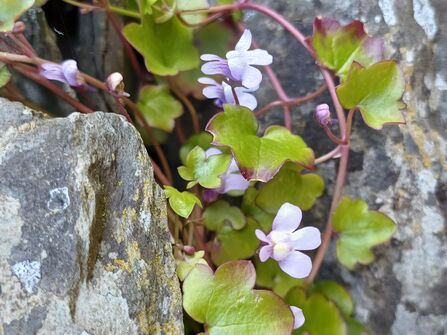
You'll spot ivy-leaved toadflax in numerous locations around the UK, and especially near to human habitation. It also thrives in mortar cracks, pavements, shingle beaches, rock gardens, dry stony urban areas, gravel, and sandy banks.

This wildflower has the ability to flower all year in mild winters and sheltered locations, preferring partial shade on north facing walls. Being a rapid spreader, it can keep growing from fragments of stems and is also ground creeping. This is an advantage when covering old stumps left in the garden, as this makes for an interesting feature!

Ivy-leaved toadflax growing amongst stones at the bottom of a wall

Leanne Manchester

How to identify ivy-leaved toadflax

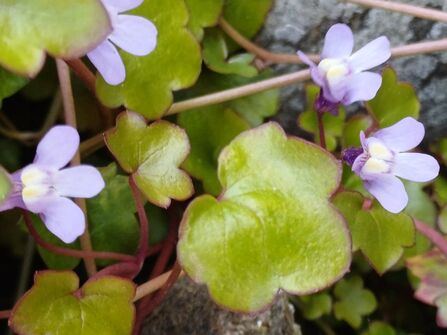
The tiny, delicate purple-lilac flowers resemble snapdragon flowers, comprising a short spur, with yellow and white in the centre. They are borne from April to October, with the peak flowering period from May to September.

Ivy-leaved Toadflax

©Katrina Martin/2020VISION

The plant owes its common name to its small, glossy, ivy-shaped leaves. Its Latin name, cymbalaria muralis, comes from the cymbal-like shape of the leaves (cymbalaria), and its tendency to grow on walls (muralis). 

The growth span can cover approximately 45cm high, and around that same spread. The thick mat of delicate growth can sometimes engulf smaller plants in cultivated garden areas. Try to enjoy the wild benefits of the plant, but if need be, gently pull it away from less desired areas when flowers are fading to limit seed production for the following year. That aside, it's a charming and beneficial wildflower.

What are the benefits of ivy-leaved toadflax for wildlife?

This is a great plant to enjoy for its wildlife benefits, providing a long-lasting source of nectar for pollinators. A dense mat of cover formed by this wildflower also provides a haven for many garden invertebrates, and dare I say it, slugs too! But they play a positive role in recycling nutrients in the soil. Spiders, woodlice and beetles are among the many insects that can be found lurking within the miniature canopy of the delicate foliage and flowers. 

It's a wonderful thing to know also that as the ivy-leaved toadflax colonises walls, it gives a home to wall-nesting solitary bee species. These bees nest in gaps in the walls and crevices that the wildflower colonises. 

A red mason bee emerging from a gap in some mortar in a brick wall

Wendy Carter

Various caterpillars can also be found feeding on this wildflower as the larvae’s food plant. Moth species including the toadflax brocade (Calophasia lunula), mainly seen in the south-east of the UK, and the barred carpet moth (Martania taeniata) are associated with this wonderful plant. 

Enjoy your walks out this summer, and keep your eyes peeled for this impressive and delightful addition to our urban and rural spaces! 

Kevin Line, guest blogger and horticulturist

Kevin Line

About the author 

Kevin Line is Head Gardener/Horticulturist at Lakeside Hotel Garden, Cumbria. He is also a member of the Professional Gardeners' Guild and the Lancashire Wildlife Trust. 

Wildflowers

Celebrate your wild garden

Let us know what you've been doing to help pollinators and other wildlife in your garden, and apply for your own My Wild Garden award!

My Wild Garden