Yellow wagtail by Dave Steel
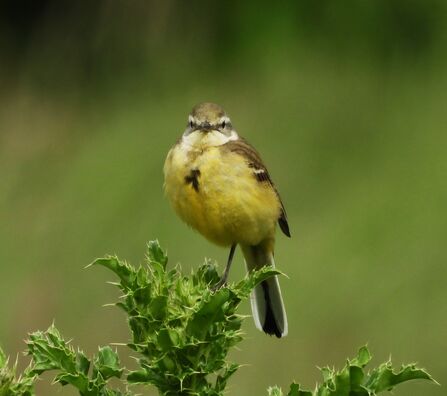
Yellow wagtail by Dave Steel
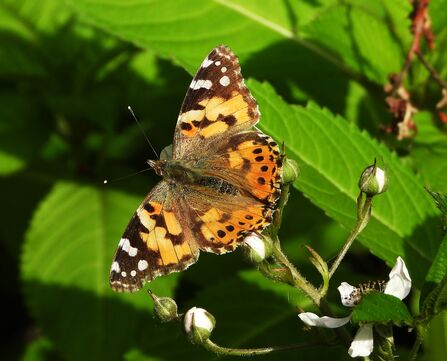
Painted lady by Dave Steel
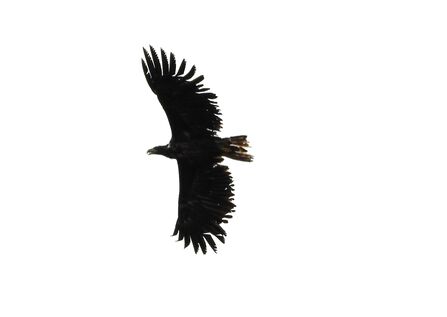
White-tailed eagle by Dave Steel
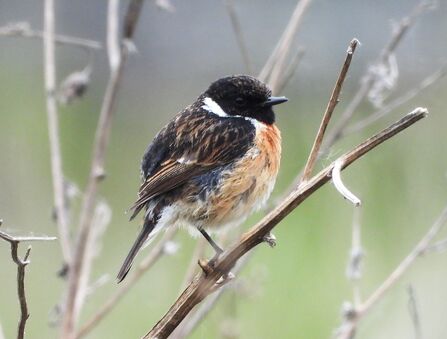
Stonechat by Dave Steel
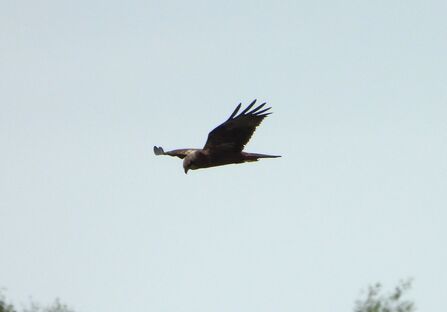
Marsh harrier by Dave Steel

Large red dragonfly hitching a lift by Dave Steel
Yellow wagtail by Dave Steel
Yellow wagtail by Dave Steel
Painted lady by Dave Steel
White-tailed eagle by Dave Steel
Stonechat by Dave Steel
Marsh harrier by Dave Steel
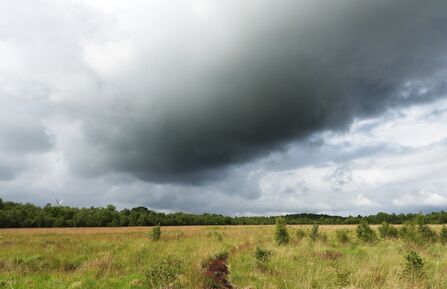
A grey start that promised rain (promise kept by 10am). Regardless the Wild will just have to get on with it, for there are young to feed and there is food to be foraged for, ‘wet’ feathers or not!
As for me, Chat Moss will be visited and there WILL be brightness to find in the wild. Sure enough there it was, though it took quite a few paces to find on this grey morning.
A nicely overgrown corner of a field brimming with nettles, thistles and more offered a perfect spot to see the wild at its best.
Whitethroat churred, stonechat chattered, moths and butterflies flitted about, with all leading my eyes to a bright spot or two when a pair of yellow wagtail popped up to check on this lumbering form which had wandered into their territory.
In noting that the male had food in its bill, I swiftly absorbed his bright feathering and retreated to leave them to feed their hidden young.
Really? Did these Butterflies actually start their (multi-generational) life in Africa???
I was simply admiring the beauty of one of many a hundred painted lady butterflies that have made it to Chat Moss this year, because there has been a once in a decade migration eruption of these so-called delicate winged flights of delight.
It caused me to reflect upon the real view we should have of nature, in which I look upon this frail frame of mine, with its aged problems, and have to accept that that the Nature we feel we can master has a far stronger grip on the world than we ever will.
I then returned my attention to this set of wings that lifted my spirits.
The rain could have kept me at home - only it never has before and why should today be any exception? If the Wild has to put up with such days, then so should I if only in solidarity with Chat Moss.
There would be something to report, I was sure of that, if only to state once more how my ‘rainproof’ gear failed to prevent the rain achieving its goal of soaking me through.
In truth I’m a big fan of rain out on Chat Moss for it keeps the LWT reserves nicely topped up with water aiding peatland restoration after decades of drainage.
Then on one of those rare periods when the rain took a pause a lapwing called out in alarm and almost directly above where I stood on Little Woolden Moss LWT Nature Reserve soared an immature white-tailed eagle.
This reserve is only 13 years old but the stories it can already tell of the LWT successes in bringing back the wild just gained a rather special tale to tell.
Tap Tap it-Tap tap it… I’ve heard it before to paraphrase Beatrix Potter and this alarm call was coming from the top of a birch tree.
This sound gave a shining example of how the LWT in buying (in 2012) and then steadily restoring a wildlife null peat-milled desert into Little Woolden Moss Nature Reserve we now have today, is working in bringing back the wild.
Atop the birch tree sat an alert sentry warning her young of possible danger - The Wild being well aware of how mankind can be such a danger in the natural world.
The cause of the sound was a female stonechat in the breeding season, which would have been an impossible sighting only 13 years ago where nothing could exist on such a devastated landscape.
Now this insect rich re-vegetated landscape can support breeding stonechat and much more. It’s something I never believed could have happened in my lifetime let alone a mere decade or so…now that’s a wild thought!
Little Woolden Moss nature reserve - after a soggy week wandering Chat Moss I decided on a “sit and watch” session from the western edge of the reserve.
The promise of sunshine evaporated into a busy set of clouds and this seemingly pausing any winged activity over the reserve.
I wasn’t disappointed, for a mere decade or so ago I would have been affronted by a desert of peat being sucked up by milling machines instead of the sweep of vegetation that I peered across today.
It was a restful, peaceful and breeze swept landscape that gave me that mindfulness those who wish us to slow down in this modern world say all can achieve if we let The Wild into our lives.
Once restfulness was achieved the wild then started to introduce activity starting with a marsh harrier floating by, easily avoiding the carrion crow that were chasing it.
A sedge warbler kicked up a fuss of song from a birch tree whilst a water rail squealed from within a nearby reedbed.
Linnet, swift, meadow pipit and more then occupied the sky, to a background of singing willow warbler and reed bunting.
It occurred to me that perhaps on my arrival this landscape was having its tea-break from which it had now emerged fully rejuvenated.
Astley Moss by Dave Steel
Whitethroat by Dave Steel
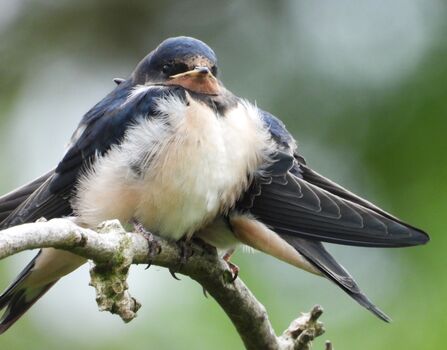
Juvenile swallows by Dave Steel
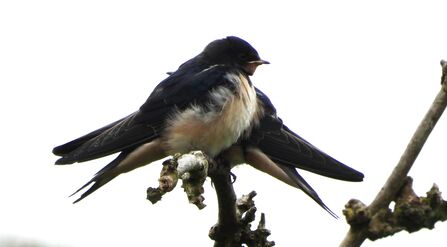
Juvenile swallows by Dave Steel
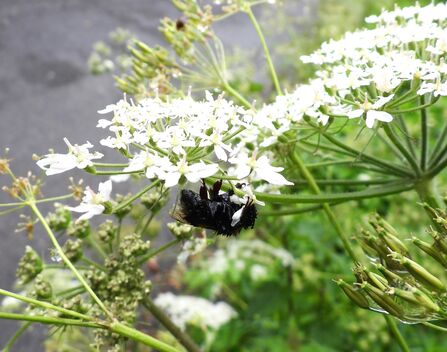
Sheltering bee by Dave Steel
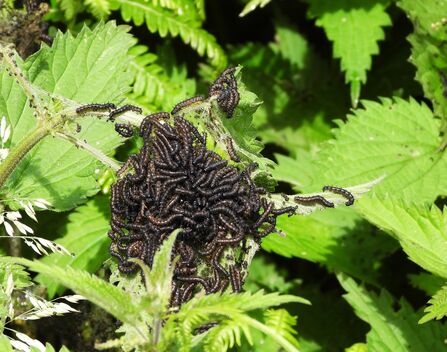
Peacock caterpillars by Dave Steel
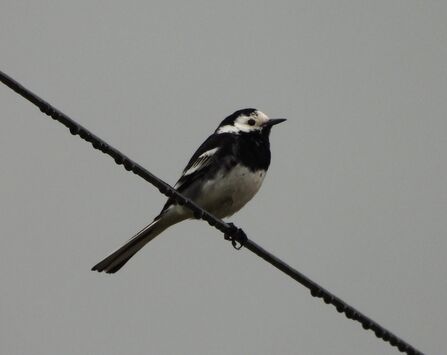
Pied wagtail by Dave Steel
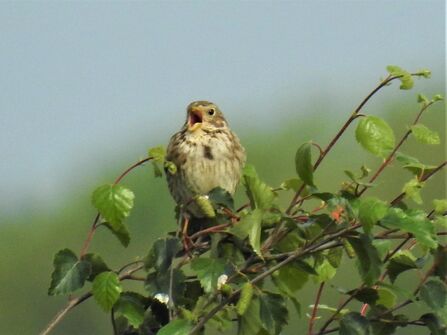
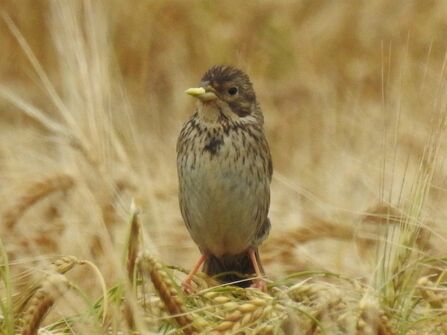
Corn bunting sings out loud by Dave Steel
Corn bunting by Dave Steel
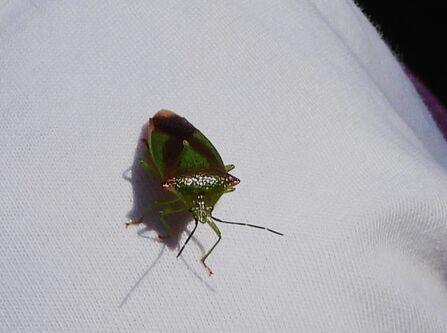
Hawthorn shiled bug by Dave Steel
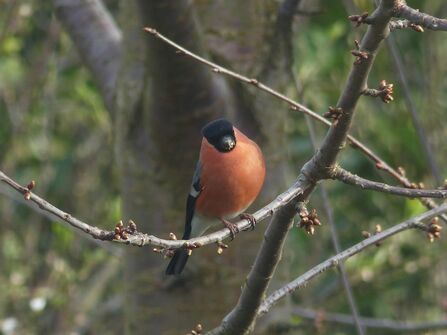
Bullfinch by Dave Steel
A track to follow. One I first meandered along 60 years ago and a breeding bird survey to complete for the LWT.
The LWT hadn’t bought this now superbly restored-back-to-the-wild Astley Moss Nature Reserve at the time. (Well done LWT for now being the proud owners)
As ever when I return to this track I go in reverie mode, thinking of the two much older friends who introduced me to this area all those decades ago.
Both have passed but are present in my thoughts on such visits, allowing my mind to meander until the present suddenly grabbed my attention and put me right up to date.
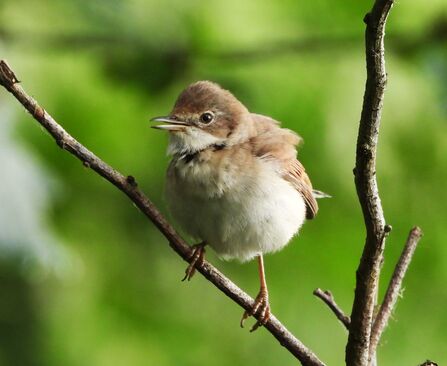
This reverie breaking moment was created by a whitethroat which started to scold me for having the temerity to wander past its nest site amongst a stand of nettles and brambles.
Mind reset to “now mode”, I hurried by this irate summer visitor—a survey to complete.
A cosy stable busy with equine activity, horses being attended to alongside plenty of banter amongst the horse owners.
Above all this activity were several shallow cups of dried mud pellets overflowing with inquisitive life alert to the constant return of doting parents bringing beaks full of insects.
These adults were greeted by begging posture wings and open gapes and, soon, one lucky young swallow received a morsel of food the adult proffered before it swished outside in search of more insects.
This area was a realm of positive harmony with the owners content to share their stables with these migrant birds.
As for the young, they were now prepared for that big world out there, ready to make a go of the wild beyond their nests.
I likened this to my childhood when all I wanted to do was play outside. Before long these fledgling birds were granted their wish but, as I discovered all those decades ago, there was still a great deal of dependency on Mam and Dad
This also soon occurred to these young birds, finding the nearest tree to still continue to beg for food. The Wild happy to offer important lessons on life.
If I'd have been as sensible as that bee, I couldn’t have taken you out in The Wild for a 3.5 hours bimble into and out of the rain.
First field a potato crop, within it carrion crows, and above it a pair of buzzards with the soundscape being a whitethroat and blackcap in song.
Sticking to field edges next was a grass and clover mix over which a flock of 30-plus house martin were taking what was obviously a good insect hatch, rising from this ‘waterproofs testing’ vegetation.
Out onto the Lane with a smart move taken to grab some shelter under two tall trees as the rain came out to play, this not deterring a group of seven swallow from feeding on insects in the lee of a nearby treeline.
Here a pied wagtail defied the rain by posing on telephone wires looking at me as if to say wimp for taking shelter.
Plodding on, I encountered a feisty chiffchaff which chivvied me along past its hidden young. I obeyed.
The next field was again grassily overgrown through which I trudged, only escaping it by creating a pathway through a stand of nettles. This took careful negotiation not necessarily because of me but to avoid several clumps of peacock butterfly caterpillars.
Steps eventually took me to a more open landscape where lapwing and meadow pipit complained bitterly about my presence. Their young to defend, bringing me slightly more rapidly to the finish of this wander than I had anticipated.
Now with the sun fully in charge I retreated to find a place to sit where I hoped the Wild wouldn't move me on.
As for the rain bee sheltering under the flower head of cow parsley. I guess it too emerged into the sunshine ready to do its own exploration of the wild.
When my daughter was about 18-months-old I was watching her happily play on the living room floor with toys spread around her, whilst in the background I had Bruch Violin concerto N01 playing.
All was well until a quite sombre sounding passage of the music (the adagio) was reached and, at that point, my daughter started to cry, her young emotions affected by the music.
Instantly I picked her up, comforted her and obviously turned off the music vowing not to play it again in her presence.
Today, as I drove to Little Woolden Moss, the piece was playing on my radio and it summed up my thoughts about wildlife loss out on most of Chat Moss. I thought particularly of the iconic farmland bird the corn bunting, all of which have been lost on these mosslands due to modern farming methods.
Oh dear, a sombre wild was gaining hold of today until I turned onto the track that leads to the reserve and perched on telephone wires a corn bunting was in song, where once they regularly sang.
The wild had found a much more cheerful ending to my wander today giving hope for this bird's return to the moss.
A shield bug at the railway station on my away day from noting The Wild, old friends to meet in Manchester.
A chattering bunch of house sparrow still holding on from the days when this was my daily journey into work greeted me on the station approach.
Above a few jackdaw made themselves heard whilst a (save for a light piping of their contact calls) pair of bullfinch tried to slip on by unnoticed.
A group of young great tit made a lot more noise than the previous pair of birds as they followed their parents in search of food.
Yes I had certainly managed to ignore The Wild this morning…really for once you would think The Wild would let me have a rest.
Then as I stepped onto the train I wistfully mulled over the inescapable fact that once your eyes/ears and very-being are alerted to The Wild it will never escape your attention. It can only be a good thing surely?
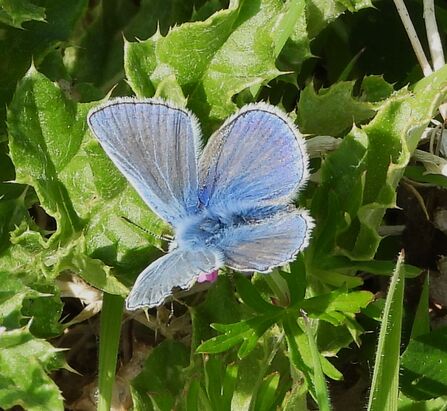
Common blue butterfly by Dave Steel
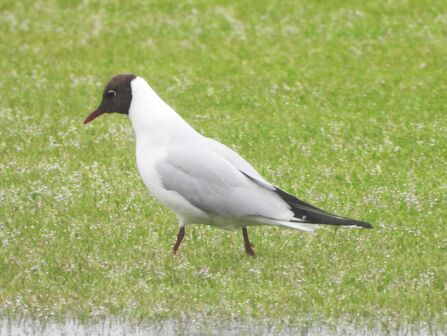
Black headed gull by Dave Steel
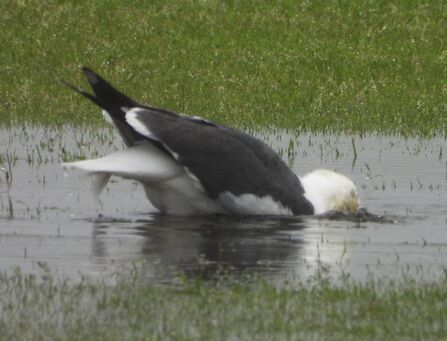
Lesser black-backed gull by Dave Steel
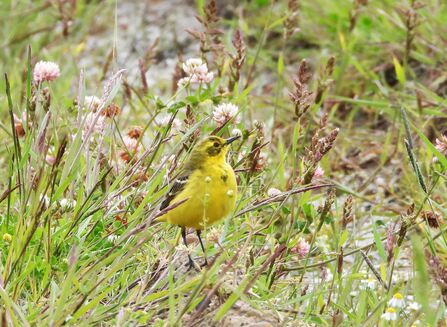
Yellow wagtail by Dave Steel
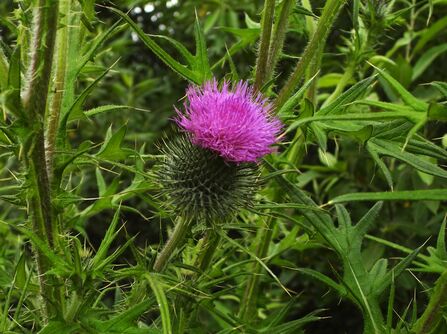
Bull thistle by Dave Steel
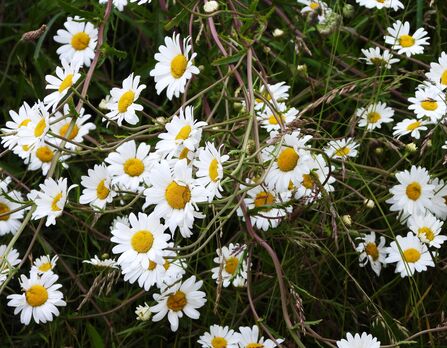
Oxeye daisy by Dave Steel
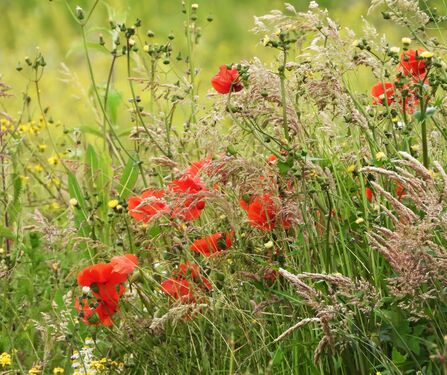
Poppy by Dave Steel
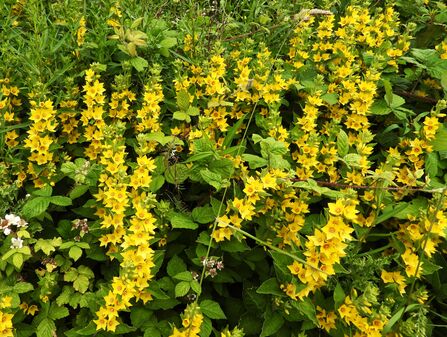
Spotted loosestrife by Dave Steel
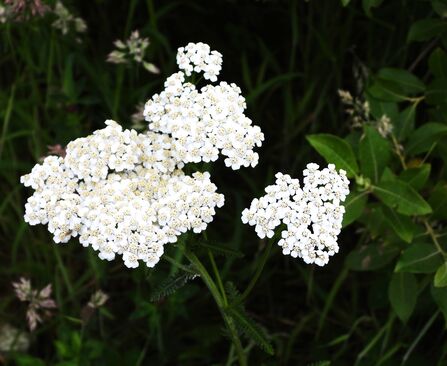
Yarrow by Dave Steel
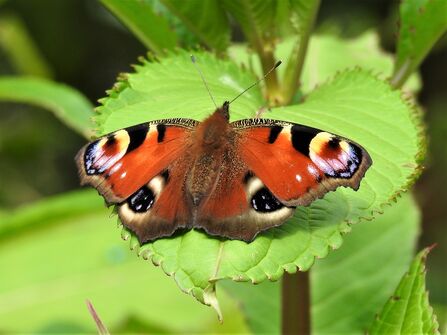
Peacock by Dave Steel
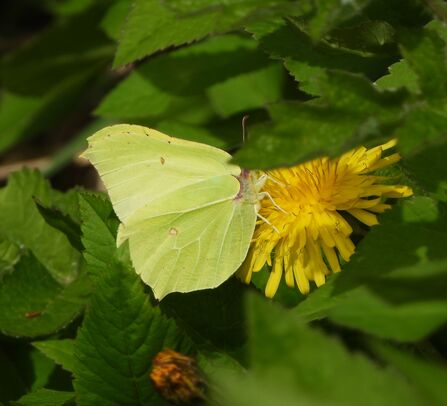
Brimstone by Dave Steel
There have been but a few moments of sunshine so far this month but today it was obvious that the sun would cower behind heavy rain clouds all day.
This observation was made as I arrived at Little Woolden Moss LWT Nature Reserve with the ‘view of sorts’ through my car window able to just about note an overflying lesser black-backed gull.
Part of my viewpoint gave views along a track which but a few days ago was bathed in sunshine which had encouraged such as reed buntings to sing their easygoing song.
That blue sky sort of morning having competition from a few common blue butterflies as to who was sporting the most vibrant blue hues.
My memories bias on such a grey soggy day was to award those male blue winged fluttering delights of energy the crown.
The beauty of that recent day brightened up today's gloom as I considered my wander along the reserves pathways, aware once more that the wild creates such positive and lasting images.
Not too many years ago I would launch out onto the moss whatever the weather without any hesitation—of late, as today, I first chose my mobile “hide” to gain my initial views of The Wild.
First was to check a turf-growing field - certainly not a nature-friendly way of treating mossland.
Ironically Nature does find a way to use such fields, with the turf hosting a bathing lesser black-backed gull, a pair of oystercatchers probing into the rain sodden turf searching successfully for worms and a pied wagtail or two finding grubs brought close to the surface due to it becoming saturated.
Out of the mist a few swallow skimmed in search of insects whilst a small flock of black-headed gull scratched the air with their raucous calls.
As a counterbalance to what was an inharmonious gull cacophony a nearby line of trees offered the accomplished songs of both blackbird and blackcap.
Now readied to wander, waterproofs on, I left the comfort of my car and blended into the rain-blessed wild.
Why did I wander onto this “awful” and messy brownfield site today?
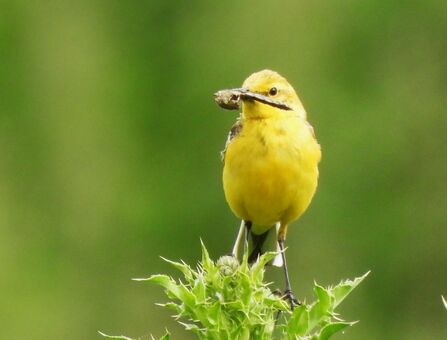
As soon as I arrived I was chastised by a pair of yellow wagtail for disturbing their nearby hidden nest of young.
This was followed by the same reaction by lapwing which had to call to their young that there was an intruder in their midst, whilst skylark rose in song which I felt I should take as a greeting of sorts.
In truth today was to be one of quiet reflection as tomorrow I will stumble into another year where the decades have already grabbed too many other such days.
Instead, I faced a morning of forever having to record each sighting of the wild this brownfield site had to offer and this was at a writer's cramp sort of level.
Sand martin, swallow, reed warbler, sedge warbler and numerous more birds vied to be recorded as I was constantly drawn to admire the myriad of wildflowers this area was carpeted with.
This rough and ready wildflower “garden” held yarrow, bull thistle, oxeye daisy, dotted loosestrife, poppy and more, leaving me in need of that peace and quiet of sort.
A retreat to nearby farmland achieved my undisturbed aim and I was able to watch over its pristine crop kept clear of any wildlife by regular drenchings of herbicides and pesticides.
The Wild knows where its welcome, often in the most unprepossessing places we could imagine.
A nation that voted for nettles as their number one plant lifted my wild spirits this morning, for in voting the peacock butterfly on top of the list they MUST too have voted for this humble “weed”.
Personally, my choice would have been the brimstone, for to me it holds spring in its bright green/yellow wings, taking flight on the rays of a sudden burst of spring sunshine.
Both butterflies overwinter, emerging in late March to early April to ensure that their flights carry us away from the dark days of winter into the light of the coming months.
I can see why the peacock came out as Number One for it can be noted from garden to more remote secluded spaces in the wild.
It was, as I was ambling along a secluded and overgrown farmtrack (the farmers here refreshingly actually try to live with and not against The Wild), which was blessed with stands of nettles, that I was halted by a large gathering or two of peacock butterfly caterpillars.
This summer's hatch of peacocks “surviving” only because these nettles were allowed to flourish, the plant being their exclusive food source.
A gentle reminder that the wild needs to be in balance if we are to see it survive into the future.
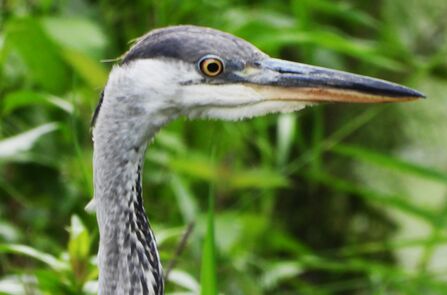
Grey heron by Dave Steel
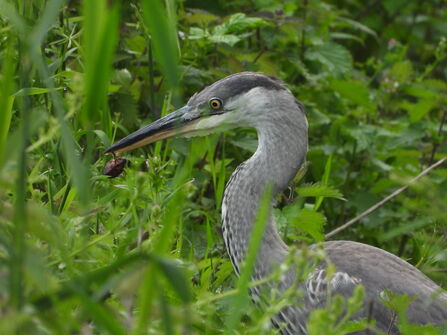
Grey heron by Dave Steel
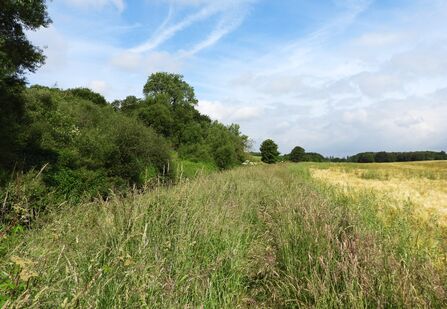
Overgrown path by Dave Steel
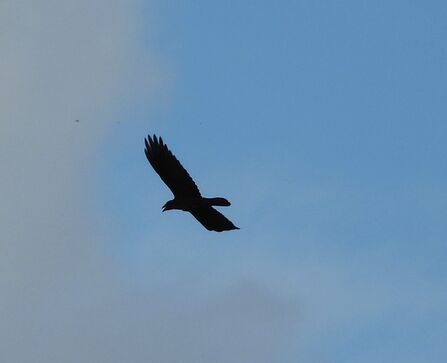
Raven by Dave Steel
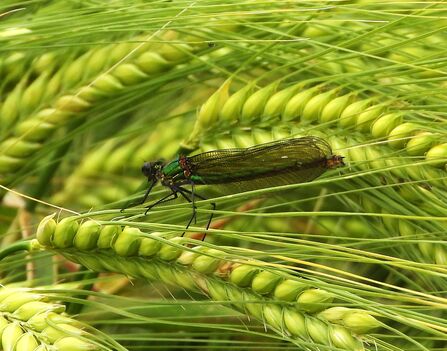
Banded demoiselle female by Dave Steel
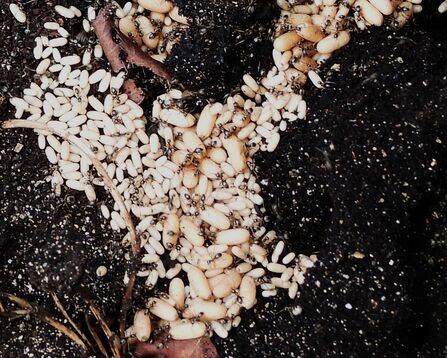
Ants' nest by Dave Steel
Cross-leaved heath and large skipper by Dave Steel
Oystercatchers by Dave Steel
Large red dragonfly hitching a lift by Dave Steel
Kettle on, cereals in bowl and breakfast soon prepared and readily devoured, then followed the tidy up which closed today's pre-moss energy input.
I was soon on the road heading straight for Little Woolden Moss LWT reserve for a breeding bird survey.
Notebook, binoculars and camera all ready for what is usually a 3.5 hour slog, which always has the ability to make me marvel at what the LWT and their willing volunteers have managed in just 14 years - from null bare peat to a refuge for a great variety of wildlife. It’s amazing.
Just before setting off, I noticed a grey heron drop into a nearby ditch, its breakfast to find. Certainly not obtained as easily as mine.
It proceeded along the ditch with the poise that a Royal Ballet star takes years of practice to obtain.
This bird's elegance was employed for a less entertaining outcome than the latter, yet it transfixed me as it sought its breakfast, succeeding both in entertaining me whilst catching first a great diving beetle soon followed by a small fish.
Our paths to breakfast were so different yet they were both because the natural world is in balance - let's keep it that way.
My amble in The Wild took me along what seemed, at first sight, to be an inconveniently overgrown Right of Way Pace adjusted to slow and off I set along this path into the gloom of this grey-skied June morning.
The Wild reflected this dullness with little activity save for the subdued songs of a blackbird and a willow warbler.
A flock of woodpigeon clapped their wings on rising from the adjacent field whilst my mind drifted to what seems like my endless past—not always welcome and a distraction was sorely needed.
A raven cronked as it passed overhead bringing my thoughts happily back to now (there is only now lest we forget) as it joined five other raven dancing high above me.
This gathering of loudly calling birds seemed to induce the sun to come out and have a look at what was causing this commotion.
The heavy vegetation then seemed to release its hidden treasures at this burst of light revealing a flush of brightly coloured hoverflies seemingly acting as a guard of honour for 20 plus banded demoiselles.
These exotic sets of wings were now eager to dance before my eyes with the odd one posing enough for a quick photograph to be grabbed.
My route remained obstinately tangled but this was no bother to me as this was where The Wild was at its best - it often is the case let's not forget.
A mixed flock of herring and lesser black-backed gulls loafed under an indifferent sky.
Nearby young rook attentively followed their parents who were probing the field looking for invertebrates to feed to these ever hungry young.
A couple of swallows came into and rapidly out of view their own young to feed.
The south track of Little Woolden Moss was the next area I wandered along, on this no hurry day.
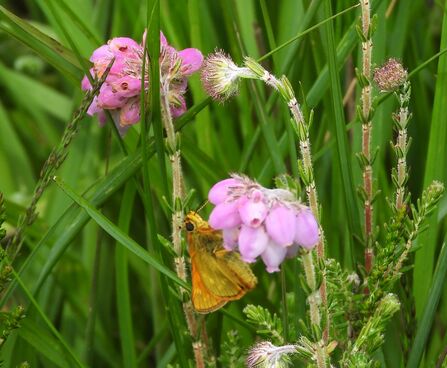
The track was then offered a few bursts of sunshine which energised a few large skipper butterflies which sought out sunlit cross-leaved heath.
A check of an ants nest under an inspection cover held more energy than I could ever muster as they hurried about their duties.
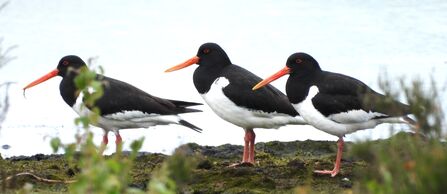
The westerly breeze helped a kestrel to remain aloft in its search for food, its quiet hovering ignored by a few oystercatcher which broadcast their loud piping calls for all to hear.
Wildlife Trust project officers paused to have a chat before they resumed their inspection of yet more vandalism to the entrance gates - more money for this charity to raise to fix this damage rather than used for encouraging more of the wild to survive.
My sit watch and reflection time considered this day spent with the wild which had once more dispelled ‘ordinary’ with its fascinating day to day life.
During a dragonfly survey on Chat Moss along the edges of a deep channel of peat-darkened still water I paused to record the sightings so far, then resumed my survey.
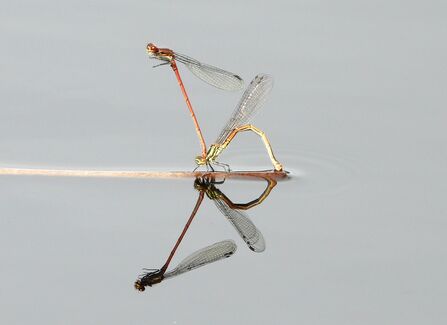
It was at this point that I noted a broken piece of reed being carried along by a gentle breeze saying “here is another day of 30 Days Wild”. Perched upon this unremarkable piece of nature's waterside debris were a pair of large red damselfly at the closing stage of their but one spring of flight.
Their ingenuity grabbed my attention for whilst the female was ovipositing an act which is always assisted by the male, their clever plan was rather than hovering over the water they hitched a ride on the reed allowing the eggs to be dispersed over a large expanse of this channel.
We must never not be impressed by the power of Nature and the myriad ways she uses to survive, in spite of how much mankind seems to be at war with that which gives us life.