Latest wildlife sightings - February 2026

Latest wildlife sightings - February 2026

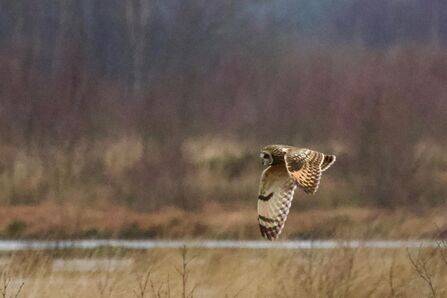
Short-eared owl at Little Woolden Moss Credit Ben Secker

Just as snowdrops and croci are starting to pop up through the cold ground, wildlife on our nature reserves across the north west continues to inspire and fascinate us. Discover the wildlife moments that our visitors have spotted and shared with us this February.
Two long-tailed tits in a coconut husk Credit Janet Packham

Long-tailed tits in a coconut husk Credit Janet Packham

Middleton Nature Reserve

Long-tailed tit

If you've ever had a flock of long-tailed tits visit your garden feeders, you'll know that it's a delightful but noisy affair! Janet Packham shared this gorgeous photo of two long-tailed tits beak deep in a coconut husk polishing off any remnants of food at Middleton nature reserve. Long-tailed tits have a black and white tail which is much longer than their small fluffy body, and they are very sociable creatures, hanging around in groups of 20 or more birds. They cluster together at night to keep themselves warm in the winter months.

Shoveler duck on the water at Middleton Nature Reserve Credit Janet Packham

Shoveler duck at Middleton Nature Reserve Credit Janet Packham

Shoveler

The shoveler duck is so-called because of its shovel shaped bill which it uses to sweep back and forth along the surface of the water to collect plant matter and small invertebrates to eat. It is also a dabbling duck, which means that it upends itself in the water, feet paddling in the air, to fish for food. This particular shoveler is a male, distinguished by its bright colours. Females are a mottled brown with a blue forewing. Janet Packham, wildlife photographer and regular visitor to Middleton, spotted this one bobbing about on the lake this month.

Two swans on the water at Middleton Nature Reserve Credit Janet Packham

Swans at Middleton Nature Reserve Credit Janet Packham

Mute swans

Mute swans are an iconic species seen regularly on our waterways in the UK. They are graceful and elegant, but anyone who visits their local pond to feed the ducks will know that they can be territorial and feisty, especially when nesting. 

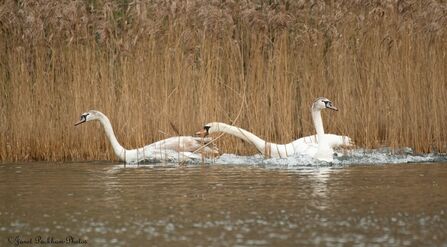
Janet Packham captured some lovely photos of this pair of swans canoodling at Middleton nature reserve. A female swan is called a 'pen' and a male is a 'cob'. Interestingly, both are involved in parenting, with some pairs mating for life. The cob (male) guards the nest while the pen (female) leaves to feed, but only the female will incubate the eggs. Their fluffy young are called 'cygnets'.

A Goldeneye duck swimming on the water at Brockholes Nature Reserve

Goldeneye duck at Brockholes Nature Reserve 

Brockholes Nature Reserve

Goldeneye duck

Richard Heyes shared his sighting of a goldeneye on the water at Brockholes nature reserve.

Most goldeneye only spend winter in the UK, usually on larger lakes and reservoirs, and they do not gather in large numbers like other duck species do, so you will often see them alone. 

Unfortunately, goldeneye are classified as 'Red' under the Birds of Conservation Concern 5: the Red List for Birds (2021), and are protected under the Wildlife and Countryside Act, 1981, so it's wonderful to see that they are making themselves at home at Brockholes.

A kestrel perched on top of a Brockholes sign

Kevin the kestrel Credit Steve Liptrot photography 

Kestrel

The kestrel is a little larger than a feral pigeon and can be found in all kinds of habitats, from open countryside to towns and villages. They nest in holes in trees, old buildings and abandoned crows' nests, laying between four and five eggs. When they hatch, both parents help to feed the young chicks.

It's no secret that Kevin the kestrel has become the poster bird for Brockholes, so this photo of him by Steve Liptrot Photography perched on top of the Brockholes sign is perfect!

Learn more about the fascinating birds of prey you can see in our north west region, and the key differences between them here.

Woodcock in flight against a blue grey sky at Heysham Moss by Janet Packham

Woodcock in flight at Heysham Moss by Janet Packham 

Heysham Nature Reserve

Woodcock

Sometimes known as the snipe of the woods, woodcocks are a master of camouflage with a mottled plumage which allow them to hunt for beetles and worms undisturbed. If disturbed, they will fly off in a zig-zag pattern before dropping back to the safety of the undergrowth. 

Woodcocks are usually nocturnal, hiding in dense undergrowth of woodlands and heathlands during the day, so it's an extra treat that Janet photographed this one in flight during her visit to Heysham nature reserve. The woodcocks that breed in the UK are mostly residents, but they are joined by wintering birds from Finland and Russia.

A goosander and lapwing at Lunt Meadows Credit Kevin Hall

A goosander and lapwing at Lunt Meadows Credit Kevin Hall

Lunt Meadows

Goosander and lapwing

Kevin Hall shared this gorgeous photo of a goosander and lapwing wading together at our Lunt Meadows nature reserve this month.

The goosander is a medium-sized duck and a member of a group called the 'sawbills' because of their long, narrow bills with saw-like 'teeth' which are good for gripping fish.

The lapwing, also called a 'peewit' because of its call, has a long crest, beautiful black and white pattern and broad, round wingtips. From a distance, lapwings look black and white, but up-close, the back has an iridescent green and purple sheen.

Grey wagtail at Lunt meadows Credit Bob Hurrell

Grey wagtail at Lunt meadows Credit Bob Hurrell

Grey wagtail

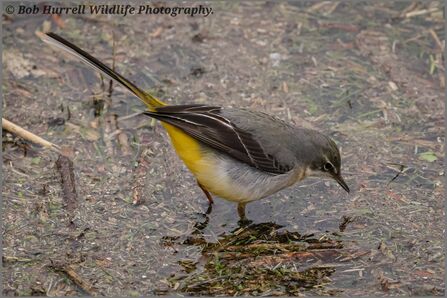
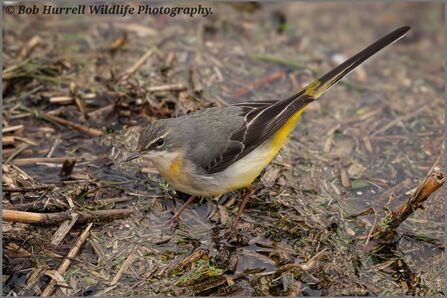
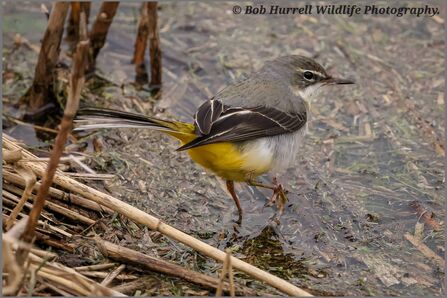
We adore this photo of a cheeky little grey wagtail that Bob Hurrell took on his visit to Lunt Meadows this February. 

The grey wagtail has a long, black and white tail, a yellow rump and a yellow belly. It is grey above with black wings. These beautiful birds were once restricted to the fast-flowing rivers of the uplands, but they have been able to expand their range due to improving water quality in many of our rivers in recent decades. It can now be found nesting in most parts of the country. Enjoy more of Bob's photos of the grey wagtail in our image gallery at the bottom of the page. 

Short-eared owl in flight looking at the camera at Little Woolden Moss Credit Ben Secker

Short-eared owl at Little Woolden Moss Credit Ben Secker

Little Woolden Moss

Short-eared owl
Ben Secker captured these excellent photos of a 'shortie' in flight over our Little Woolden Moss reserve this month. 

Short-eared owls mainly hunt during the daytime, flying low over moorland, grassland and saltmarshes where they feed on field voles and small birds. About the same size as the barn owl, but with long wings, the short-eared owl breeds in North England and Scotland, but can be seen more widely in winter. They nest on the ground in scraped-out hollows lined with grass and downy feathers.

Have you seen some wonderful wildlife at one of reserves recently? Share with us on Facebook or Instagram

Don't have social media? You can send your snaps to us via this form

Alternatively, you could enter our monthly photography competition!