Latest wildlife sightings on our reserves - April 2026

Latest wildlife sightings on our reserves - April 2026

Green-veined butterfly at Mere Sands Wood Credit swaynephotography

Our butterflies are back! As are many spring and summer migrant birds, plus our familiar favourite resident wildlife, like kestrels at Brockholes and barn owls at Lunt Meadows. Explore the wildlife that visitors have been seeing at our nature reserves as spring unfolds across Lancashire, Manchester and North Merseyside this month.
Long-eared owl Credit Nick Jordan

Long-eared owl Credit Nick Jordan

Little Woolden Moss, Greater Manchester

Long-eared owl


Nick photgraphed this lovely long-eared owl whilst helping out at one of our mosses in Manchester this month. He said "A close encounter whilst back out working on the bog with Lancashire wildlife trust, with our normally elusive and nocturnal tufty friend watching us intently from the woodland perimeter. A passing bird-watcher kindly allowed me to film through his telescope."

What a fantastic photo! Did you know that the 'ear' tufts of both long- and short-eared owls are not actually ears at all, but feathers that can be raised when the owl is alarmed, or wants to make itself look bigger.

Learn more about the different species of owl you can spot in our region.

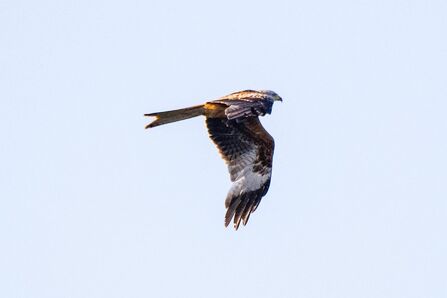
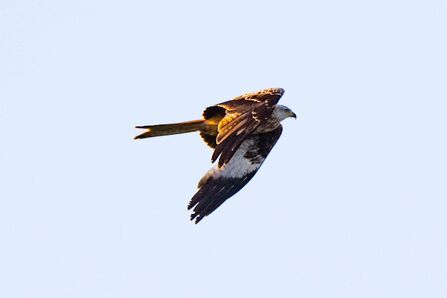
Red Kite in flight against the sky at Brockholes Credit Craig Smith

Red Kite in flight against the sky at Brockholes Credit Craig Smith

Brockholes nature reserve, Preston


Red kite
Regular visitor and avid wildlife photographer Craig Smith sighted the rare red kite from the River Ribble viewpoint at Brockholes nature reserve last week. A beautiful bird of prey, red kites are a true success story of conservation. Once restricted to Wales due to persecution, re-introductions have helped red kites make a comeback across the country. They can now be found from southeast England to the Highlands of Scotland. We are delighted that Craig shared these photos with us. View more photos from our image gallery at the bottom of the page.

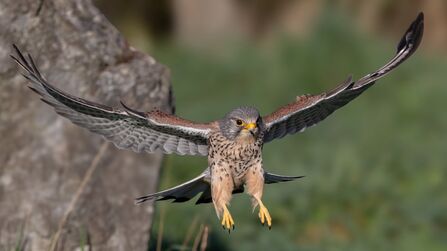
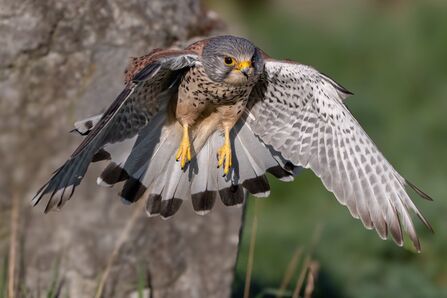
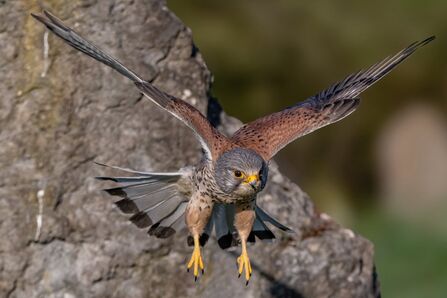
Kestrel in flight at Brockholes credit Craig Smith

Kestrel in flight at Brockholes credit Craig Smith

Kestrel

We love how many visitors share their photos of kestrels with us from across our reserves. This photo by Craig Smith is a particularly stunning one as he captures this kestrel taking off in the spring sunlight. 

Also known as a 'windhover' because of its ability to stay still in strong winds whilst pinpointing its prey, kestrels are typically seen hovering, with their pointed wings held out. Males have a grey head and tail with a prominent black band, a gingery-brown back and a creamy underside which is speckled with black. Females are similar, but with a more uniform brown back and dark bands on the tail.

Swallow in flight in a clear blue sky Credit Craig Smith

Swallow Credit Craig Smith

Swallow

Like all wildlife lovers, we delight in seeing the spring and summer migrant birds returning to our isles after an incredibly long and perilous journey. This beautiful swallow was sighted at Brockholes this month, showing off its gorgeous colours and distinctive forked tail against the sky.

Until the 19th century, people thought that the swallow hibernated over winter. Of course, we now know that it migrates to South Africa from the UK, undertaking a perilous journey, during which it is vulnerable to starvation and stormy weather. 

Find out which spring and summer migrants you can see in our region from now until the autumn here.

Green-veined butterfly resting on a green leaf at Mere Sands Wood Credit swaynephotography

Green-veined butterfly at Mere Sands Wood Credit swaynephotography

Mere Sands Wood, Merseyside


Green-veined butterfly

Regular visitor to Mere Sands Wood Steve Brayne shared a great close-up photo of this green-veined white butterfly with us from his walk this month. 

Green-veined whites are found in a variety of habitats, including hedgerows, woodland rides and meadows, as well as farmland, gardens and parks, making Mere Sands Wood the perfect habitat for it. It especially likes damp areas with lush vegetation. Water-cress is a very common host plant for the butterfly. The foodplants of the caterpillars are members of the cabbage family, including cuckooflower and hedge mustard.

Blackcap Credit Steve Brayne photography

Blackcap Credit Steve Brayne photography

Blackcap

This chirpy blackcap was happy to be photographed by Steve at Mere Sands Wood. 

Known as the 'nightingale of the north' because of their beautiful birdsong, it is actually only the male that sports a black cap on its head. Females are distinguished by a gingery-brown cap. They are easily confused with the marsh tit and willow tit, but the way to identify it to look for the absence of a black bib on its chest.

Blackcaps were once just summer visitors to the UK, but can now be seen all year-round as winter migrants from Germany and north-east Europe appear from September onwards. Blackcaps will feed on insects in summer and berries and fruit in winter. They nest in hedges or brambles and produce up to two clutches of four to six eggs a year.

Lunt meadows wildlife sightings photo collage Credit Dave Edwards

Lunt meadows photo collage Credit Dave Edwards 

Lunt Meadows nature reserve, Merseyside
 

Dave Edwards has been busy on his visits to Lunt Meadows this month! 

He shared a lovely collage of all his sightings from his visit to our North Merseyside reserve this April, including a buzzard, swallow, teal, heron, jackdaw, cetti's warbler, Canada geese, greylag goose, coot, mallard, moorhen, lapwing, various gulls, speckled wood butterfly, orange tip butterfly and small white butterfly. Phew!

Did you know that as well as being a nature reserve, Lunt Meadows is a fascinating archaeological site home to one of just a few surviving Mesolithic (Middle Stone Age) settlements. People were living here 9000 years ago! Head to the National Museum of Liverpool website for more information about the site’s history and the exciting finds unearthed by archaeologists.

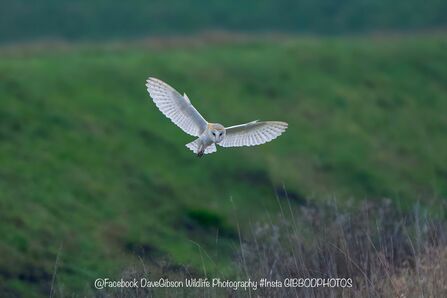
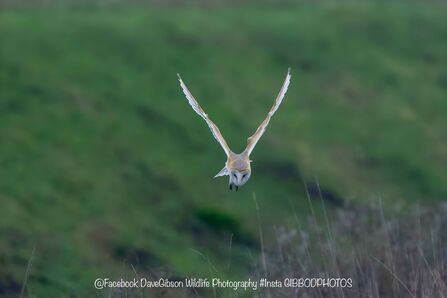
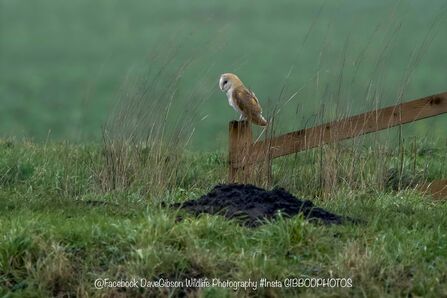
Barn owl in flight at Lunt Meadows Credit Dave Gibson

Barn owl in flight at Lunt Meadows Credit Dave Gibson

Barn owl

Dave shared these wonderful sightings of a beautiful barn owl sitting on a post, then spreading its wing in flight at Lunt Meadows this month. Historically, barn owls have been known by many different nicknames, such as 'ghost owl', 'church owl' and 'screech owl'. But the name 'demon owl' is telling of how barn owls were once considered by some rural populations as something other-worldly and haunting with their piercing shrieks and hissing calls.

Discover how barn owls hunt, and when is best to see them here

Have you seen some wonderful wildlife at one of reserves recently? Share with us on Facebook or Instagram

Don't have social media? You can send your snaps to us via this form

Alternatively, you could enter our monthly photography competition!