
Let me take you on a walk around the garden and the hedgerows, look at some projects for gardening for wildlife in autumn, and just simply enjoy spotting interesting things that we can all look out for at this time of year, whether you've a green space or not.
Autumn jobs in the wildlife garden

Guelder rose, Karen Lloyd
Guest writer and professional gardener Kevin Line takes us on a tour around his wildlife garden and talks us through some of the jobs that can be done during autumn to help wildlife through the colder months ahead.

Dog rose hips, Kevin Line
Add berry-bearing shrubs
The beautiful pink-white flowers of the native dog rose, Rosa canina (left), seen in our hedgerows are now bursting with the beautiful red rose hips, a great source of food for birds and some mammals. On sunny autumn days, enjoy the glow of the ornamental fruits, or even on dull rainy days, those hips add a touch of bright glowing colour.
The prominent yellow stamens of the dog rose in flower are great landing stations within the open 5 petalled flowers for the transfer of pollen for bees, butterflies, hoverflies and beetles.
Hawthorn berries (known as haws) are a vital autumn food source for birds, particularly thrushes, fieldfares and starlings. Although hawthorn berries are not poisonous to humans and pets, the seeds contain a compound which is toxic in large quantities.
And in the garden, shrubs such as skimmia are also a great food source for birds with their glowing berries.
How to make a shrub garden for wildlife
Hawthorn and skimmia berries can be seen in the photos below.
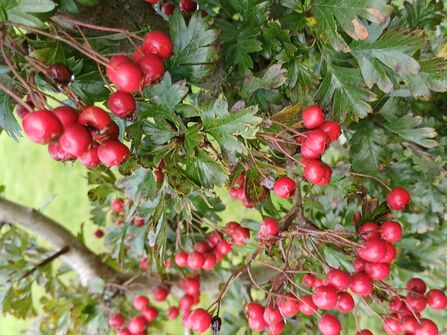
Hawthorn berries, Kevin Line
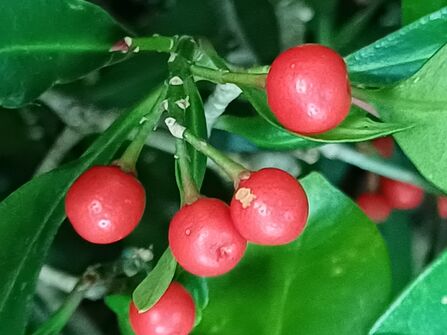
Skimmia berries, Kevin Line

Guelder rose, Karen Lloyd
Create a mini hedgerow
Planting any small hedgerow with small bare rooted subjects is less costly than planting mature trees. Hawthorn is excellent, mixed with a touch of holly and viburnum opulus (guelder rose) which produces bright red berries in autumn amid their maple-like shaped leaves (right). These also turn beautiful autumn shades; they're my absolute favourite!
Hollies planted as standalone trees do require a male and female tree in order to produce berries. It's great of course if you can develop this within a hedge, but even just their beautiful glossy leaves will develop and knit together into great cover for wildlife.

Gemma de Gouveia
Leave your leaves
I don't tidy borders too much of fallen leaves; instead I let them build up a touch around the plants. Firstly, they're great organic matter to decompose and feed the soil, and secondly, they act as perfect refuges for many insect species; and frogs and toads will take cover also. Blackbirds in particular also love to forage amongst the leaves.
Let the grass grow
Grasses in our lawn long since left after no mow May can still be left for the keen butterfly gardener! There is no nectar source from grasses, but throughout the season they do provide pollen for transportation by bees and butterflies. This season the butterfly species have fortunately increased in our garden.
This time of year, leaving grasses will attract butterflies including meadow brown, gatekeeper, small skipper, speckled wood and ringlets. Egg laying will occur which gives rise to feeding from the resulting caterpillars.
Look out also for incredible fungi species, just to enjoy the observations at close quarters, but don't pick to eat unless you have a knowledgeable expert with you. There are many poisonous ones, as well as beneficial - it's a minefield for mycologists!
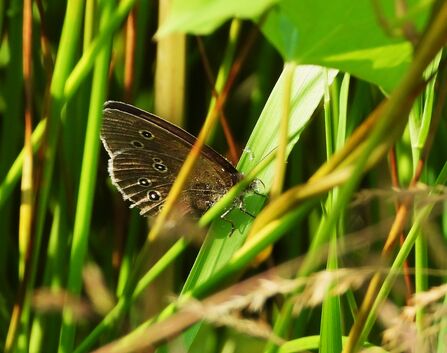
Ringlet by Dave Steel
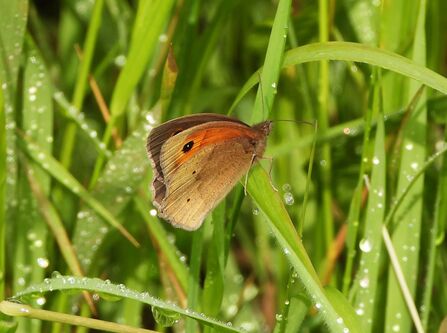
Meadow brown by Dave Steel
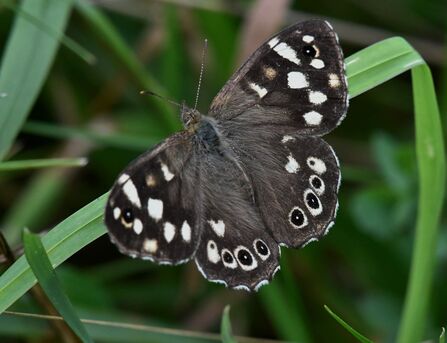
Speckled wood butterfly at Brockholes (c) Paul Lambert
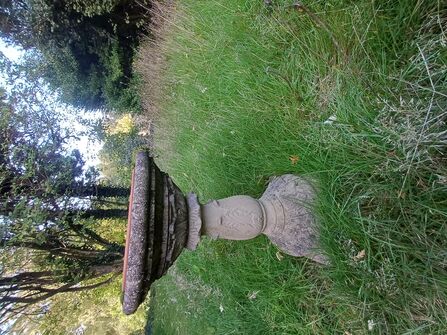
Long grasses and bird bath in the garden, Kevin Line
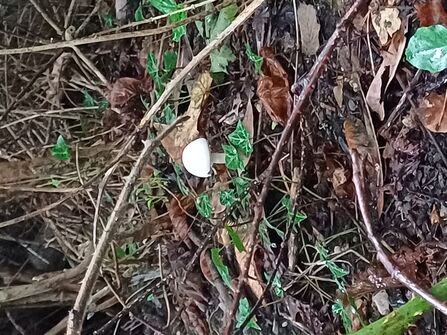
Garden fungi, Kevin Line
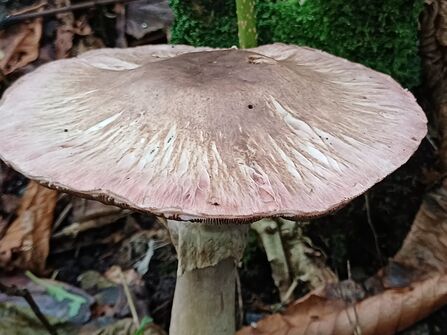
Garden fungi, Kevin Line
Create shelter for wildlife
I've been constructing a dead hedge in our garden (below) made from old cuttings from throughout the season. We never burn cuttings as bonfires are not good for the environment or wildlife. Instead of transporting to the tip, why not build a dead hedge which encourages all sorts of mammals and birds? Hedgehogs will be particularly glad of these places of refuge as they prepare for winter hibernation!
I leave perennial flowers with their dried stems for as long as possible during autumn and winter. The dried stems are sometimes hollow, and seed heads provide excellent cavities for insects to take cover, with temperatures being that much warmer inside. This Cephalaria (giant scabious) below is a great example; plus on frosty mornings, they look a real spectacle, a show piece!
Log piles too like this big one are great refuges for wildlife at this time of year. We've inserted fir cones into our log pile for extra effect and to create additional cavities within log pockets for insects.
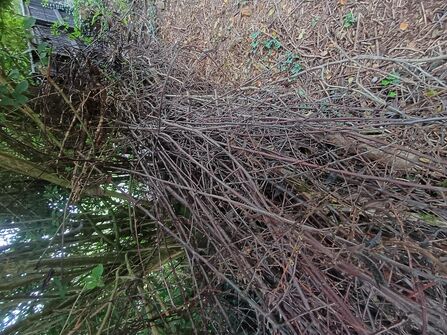
Dead hedge, Kevin Line
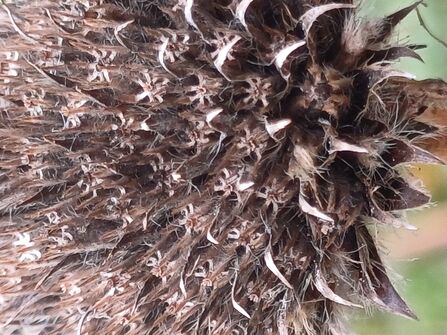
Cephalaria gigantea (giant scabious), Kevin Line
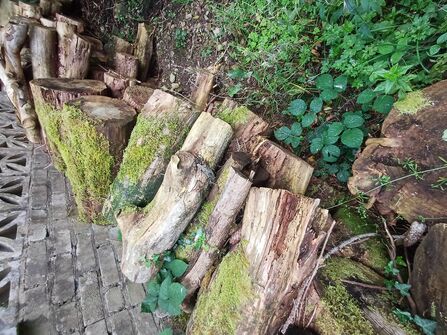
Log pile, Kevin Line
Be sure to keep your bird baths clean and well-scrubbed supplying fresh water, and following RSPB safe seasonal feeding guidelines, don't start to feed seeds or nuts again until 1st November onwards up to 30th April.
Keep enjoying the wildlife garden in autumn; it's the start of the continuing care that's so important to help wildlife through the months ahead.

Kevin Line
About the author
Kevin Line is Head Gardener/Plantsman at Lakeside Hotel Garden, Cumbria. He is also a member of the Professional Gardeners' Guild and the Lancashire Wildlife Trust, and HortWeek industry columnist.


Peter Cairns/2020VISION
Celebrate your wild garden
Let us know what you've been doing to help wildlife in your garden this season, and apply for your own My Wild Garden award!